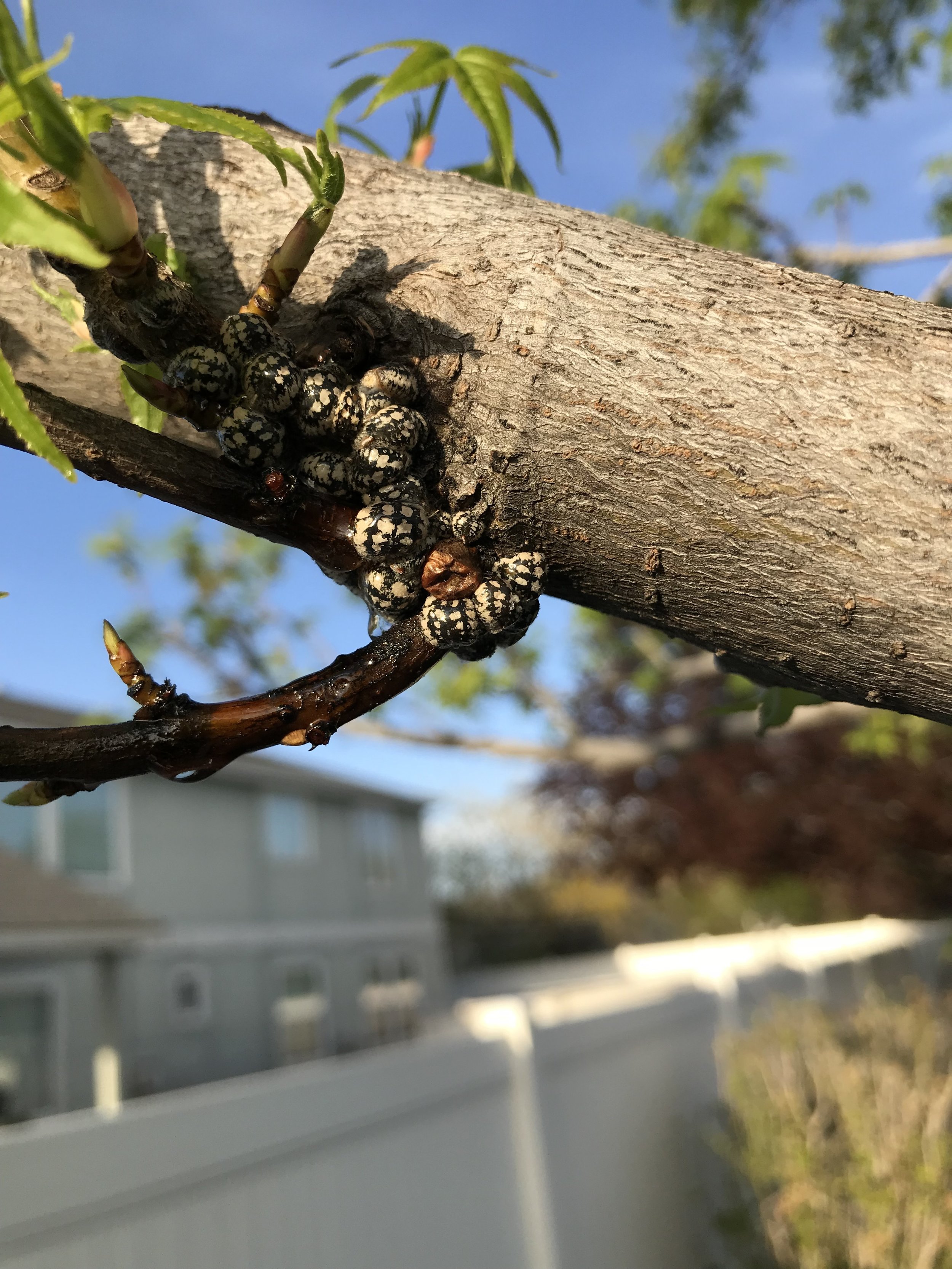
Scale is a sap sucking insect that resembles an oyster shell that either cover branches like the tree pictured above or on the foliage of arborvitae. They can be challenging to control for when their shells are soft, insecticides work; when they are hard they do not. For deciduous trees you can use a systemic insecticide like the Bonide Annual Tree and Shrub insect control. For evergreens it would be better to use a horticultural oil like Bonide All Seasons Oil or Malathion to kill the scales.
An few signs you have scale is if you see shells on branches (not normal), the foliage is sticky or there are a lot of flies hanging around you plants (this also is a sign of aphids too).
Percy Wiseman Rhododendron has bright colored flowers of pinks and corals. Rhododendrons are shade loving evergreens in our area, needing to be shaded from noon to 5 by trees or buildings. Percy reaches about 4 feet tall and wide. Likes soils that moist but not boggy and acidic soils.
Kimono May Snow Azalea is a new azalea with large pure white blooms. They flower later than standard azaleas and behaves like a ground-cover keeping to about 16 inches tall and 36 inches wide. Like Rhodies, they are best planted in noon to 5 shade. Likes soils that moist but not boggy and acidic soils. Azaleas are semi evergreen in our area where they can loose their leaves if the winters are cold enough.
President Grevy Lilac is a "blue" lilac with a strong fragrance and lots of blooms! Lilacs handle full sun to part sun conditions. President Grevy is tall growing to about 8 to 10 feet tall and 10 to 12 feet wide. It makes a great backdrop to other plants or can be used as a hedge mixed with either evergreens or summer blooming plants. Lilacs love alkaline soil and chili winters, so our area is great for them.
This weeks plants are very durable plants.
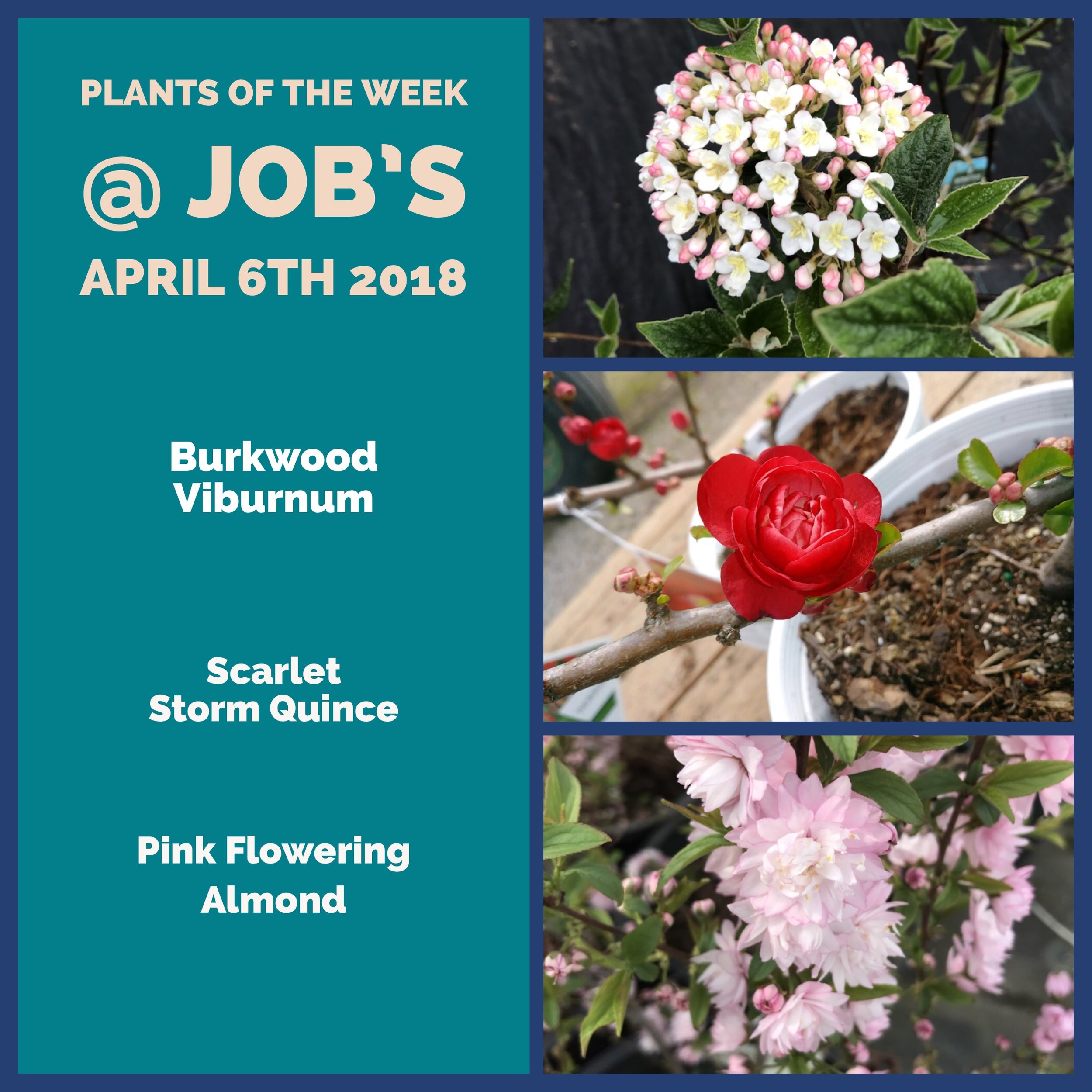
Burkwood Viburnum is a fragrant bloomer that reaches 10 feet tall and 6 to 8 feet wide. It's a cousin of the Snowball Bush but blooms earlier and very fragrant, some liken it to jasmine. To contrast the blooms it has glossy green leaves that in fall turn yellow and orange. Prefers full to partial sun.
Scarlet Storm or Double Take Scarlet Quince is a thorn less and fruitless Quince that is more garden friendly. Older Quince varieties could be nasty with the thorns but not any one of the Double Take series of Quince. The dark red blooms emerge before the leaves. Great for a backdrop with perennials in front. Reaches 6 feet tall and wide. Prefers full to partial sun.
Pink Flowering Almond, is actually more related to a cherry than an almond. The double pink blooms cover the branches in early April. Tends to be a little shrubby but can be pruned to be tamed after it has finished blooming. Reaches 5 to 6 feet tall and wide. Prefers full to partial sun.
Magical Gold Forsythia is a large flowering Forsythia that is compact at 5 to 6 feet tall and wide. It's also tends not to get lanky like the larger varieties. It likes full sun to part sun conditions. When it flowers in early March it is covered with large golden yellow blooms, a great way to start spring!
Kramer's Rote Heather is an evergreen that starts blooming in February and goes into April with dark pink flowers. It stays low at a foot high and spreads to about three feet. It prefers afternoon shade in our area.
Marianne Red Anemone is a perennial with gorgeous red blooms. It flowers in March. They reach about 1 ft tall and about 2 to 3 feet wide. In our area they do well in afternoon shade and morning sun. Don't freak out that they go dormant when it gets hot out.
While we don't offer U-Cut trees, here is some information on how to have an adventure getting one from the Umatilla National Forest.
Read More
Different types of grasses need different types of winter clean up. Alex with Job's Nursery walks you through the different types and how to clean them up.
Read More
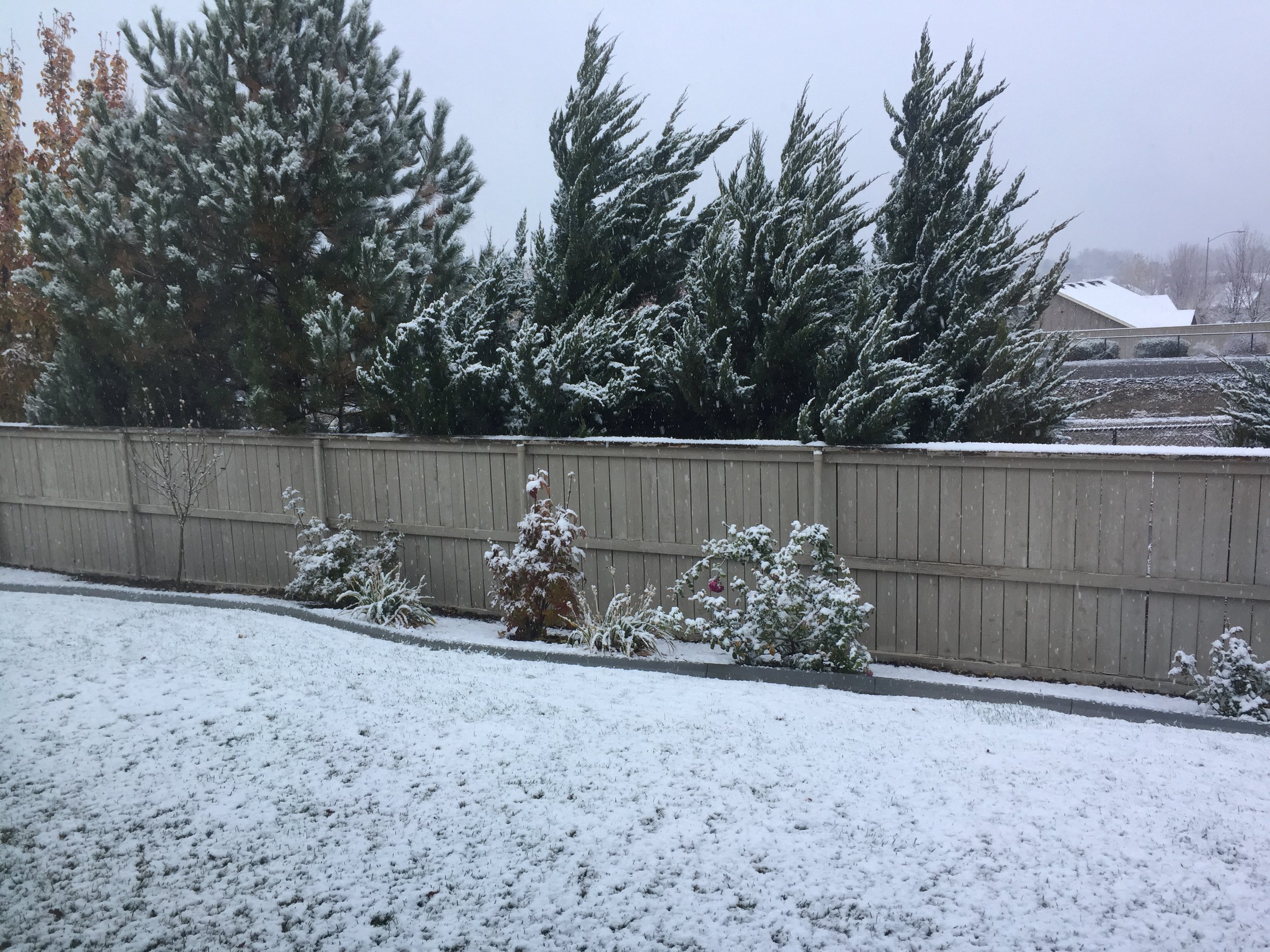
November 5th got some snow which is earlier than normal. Could it hurt plants?
Read More