Plants of the Week of June 8th
This week’s plant picks for June 8th. A tree, a shade lover and a heat lover.
Read More
Helping Tri-City Gardeners Grow Since 1940!
Job's Nursery LLC is a family owned nursery and tree farm that offers a wide selection of outdoor plants that are hardy for our area. We are located just north of Pasco on Columbia River Road. It's a short trip to a beautiful location to escape the hustle and bustle of your everyday life.

This week’s plant picks for June 8th. A tree, a shade lover and a heat lover.
Read More
June is the best month to determine the light exposure (generally referred to as exposure) in your yard because it's has the longest days and the sun is at highest angle. By checking now you can better account for hot, sunny summer days that can wreak havoc on shade loving plants or help heat lovers thrive. It also a good idea to check your exposure every couple of years to account for tree growth or other changes.
Here are the steps to checking your exposure.
1. Download our Exposure Chart.
2. Name the different beds you want to track on the chart.
3. On a leisure day at home, check every hour or so, particularly in the afternoon and fill in the circle for that hour if the bed is shaded.
4. Once it's all filled out you can now research plants online or at the nursery. You are welcome to show our staff the chart and we can show plants as well.
5. Now plant your new landscape additions when you have time or best luck and watch them thrive.

Oak Leaf Hydrangea gets its name because the leaves on it look like an oak leaf. They reach 4 to 6 ft tall and wide. They enjoy sun but like a little shade around 3 to 4 pm. They flower white in June and the flowers age to pink over time. The fall colors are shades of red and is striking.
Rugged Charm Maple is a small tree that actually makes use of it’s helicopters. They turn red in June so it looks like the tree is flowering! Rugged Charm grows to 20 to 25 feet tall and about 20 feet wide. Works great for small spaces or yards. Handles full sun and wind with no issues. Fall color is orange red.

Parade Day Rose is a new variety for 2018. It's a fuchsia and white striped rose with a strong citrus fragrance. I like the form and color blend. It's found in our Hybrid Tea section but it's really a grandiflora which can bloom one flower per stem or in clusters and reaches 5 to 6 feet tall and wide. Roses prefer full sun and good airflow.
Cheyenne Privet is typically a hedge plant that responds well to pruning. It's deciduous with dark green leaves. What earns it's spot in the weekly highlights is the white fragrant flowers. The flower are lilac smelling and very strong. Privets enjoy both full sun to partial sun exposures. Can be used for privacy or a fragrant back drop. Reaches 12 to 15 feet tall and 10 feet wide.

Here are my two picks for this week going that are going to be vibrant flower colors for a long bloom season.
The Crimson Kisses Weigela is a sun loving hummingbird attracting, bush with a great red flower color. It stays compact at 3 feet tall and wide. The foliage is a dark green that contrasts well with red bloom that rebloom throughout the summer. Crimson Kisses is supposed to not get lanky like other weigela varieties, so far it's proving as marketed at staying nice and compact.
The Ignition Purple Salvia is a heat loving plant for hot and dry areas that blooms a rich purple spring through summer. It can have morning shade but prefers all day sun. Reaches 2 feet tall and about 3 feet wide. It's works well with Yarrow, Black Eyed Susan and Russian Sage as a brilliant contrast to their flower colors.

This week was hard to pick out three plants. Itoh Peonies are in full bloom, salvia are all happy and so were the Matrix lilies. These all receive honorable mention this week.
Our first plant is another one from my yard the Onadaga Viburnum, it has red new growth and in early May white lace cap blooms that resemble a Hydrangea. Except it lives in full to partial sun. It's as tough as a Snowball Viburnum. It grows to 10 to 12 feet tall and 5 to 7 feet wall. It can be a great privacy hedge mixed with Rose of Sharon, Lilacs or even Arborvitae.
The Klondike Exbury Azalea is part of the deciduous azalea group where they lose their foliage in the fall with beautiful fall color. The orange rhododendron-like flowers are wonderful this time of year. Klondike gets 4 to 6 feet tall and wide. They do best with filtered shade at 3 to 5 pm in summer.
Wine and Roses Weigela is a chocolate or bronze foliage that flowers magenta pink blooms that attract hummingbirds and butterflies in May. It reaches 4 to 6 feet tall and wide. For best foliage color, plant in full sun but it will take some shade. Responds well to pruning if it gets raggedy. Great contrast to blue grey or green leafed plants.

This week’s plant picks!
Read More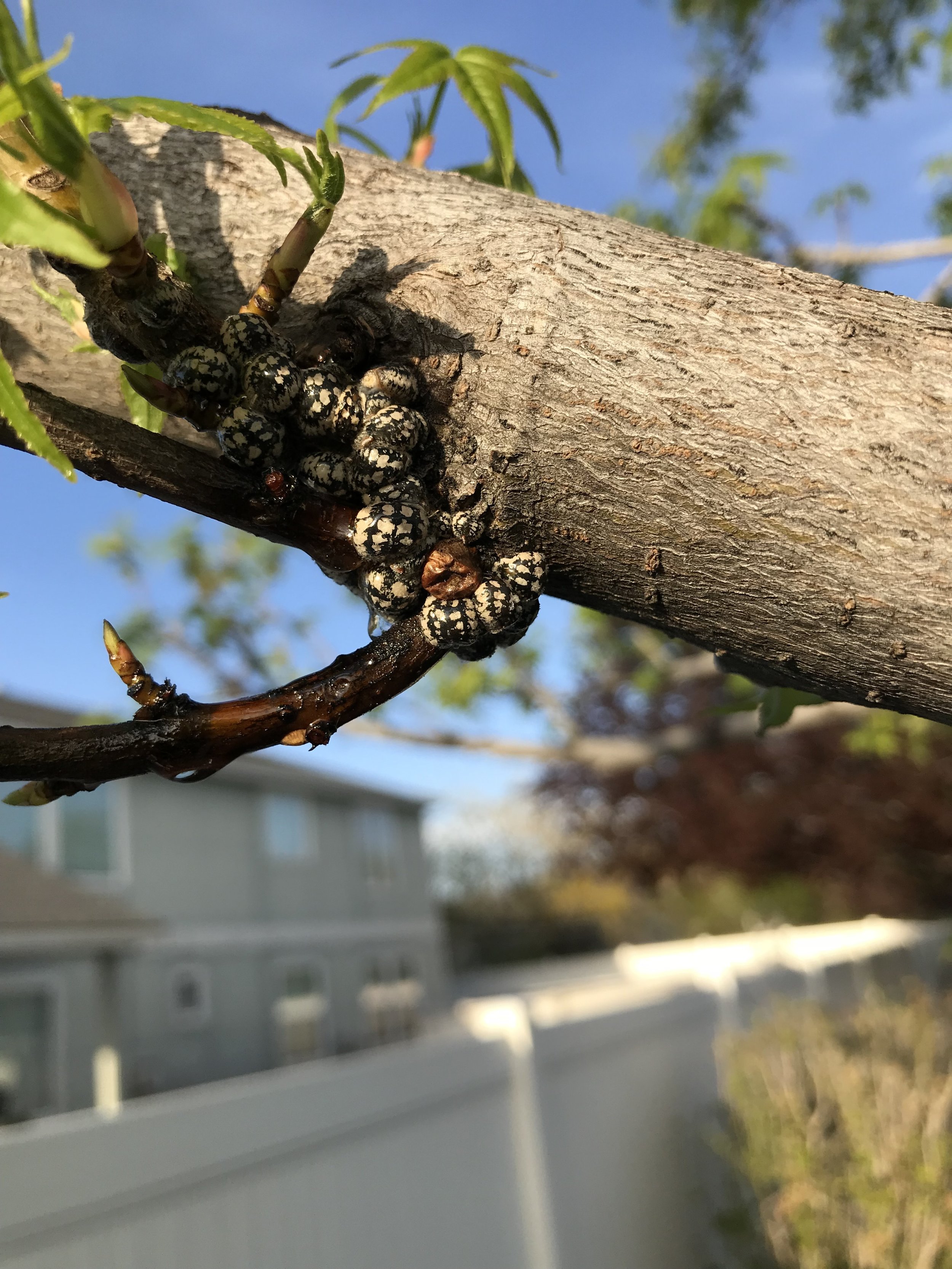
Scale is a sap sucking insect that resembles an oyster shell that either cover branches like the tree pictured above or on the foliage of arborvitae. They can be challenging to control for when their shells are soft, insecticides work; when they are hard they do not. For deciduous trees you can use a systemic insecticide like the Bonide Annual Tree and Shrub insect control. For evergreens it would be better to use a horticultural oil like Bonide All Seasons Oil or Malathion to kill the scales.
An few signs you have scale is if you see shells on branches (not normal), the foliage is sticky or there are a lot of flies hanging around you plants (this also is a sign of aphids too).

Percy Wiseman Rhododendron has bright colored flowers of pinks and corals. Rhododendrons are shade loving evergreens in our area, needing to be shaded from noon to 5 by trees or buildings. Percy reaches about 4 feet tall and wide. Likes soils that moist but not boggy and acidic soils.
Kimono May Snow Azalea is a new azalea with large pure white blooms. They flower later than standard azaleas and behaves like a ground-cover keeping to about 16 inches tall and 36 inches wide. Like Rhodies, they are best planted in noon to 5 shade. Likes soils that moist but not boggy and acidic soils. Azaleas are semi evergreen in our area where they can loose their leaves if the winters are cold enough.
President Grevy Lilac is a "blue" lilac with a strong fragrance and lots of blooms! Lilacs handle full sun to part sun conditions. President Grevy is tall growing to about 8 to 10 feet tall and 10 to 12 feet wide. It makes a great backdrop to other plants or can be used as a hedge mixed with either evergreens or summer blooming plants. Lilacs love alkaline soil and chili winters, so our area is great for them.

An example of inward growing branches

Here is a tree top that was broken during shipping along an old injury
Some of our trees come in as potted liners, they are allowed to grow and are blank slates for nurseries like Job's to grow them on from there. First we start by fixing the top by removing all inward growing branches, double leaders, damaged branches or tops and dead branches. Then we tip back side branches about 6 inches to an outward facing bud to encourage the trees to fill out without being bushy.
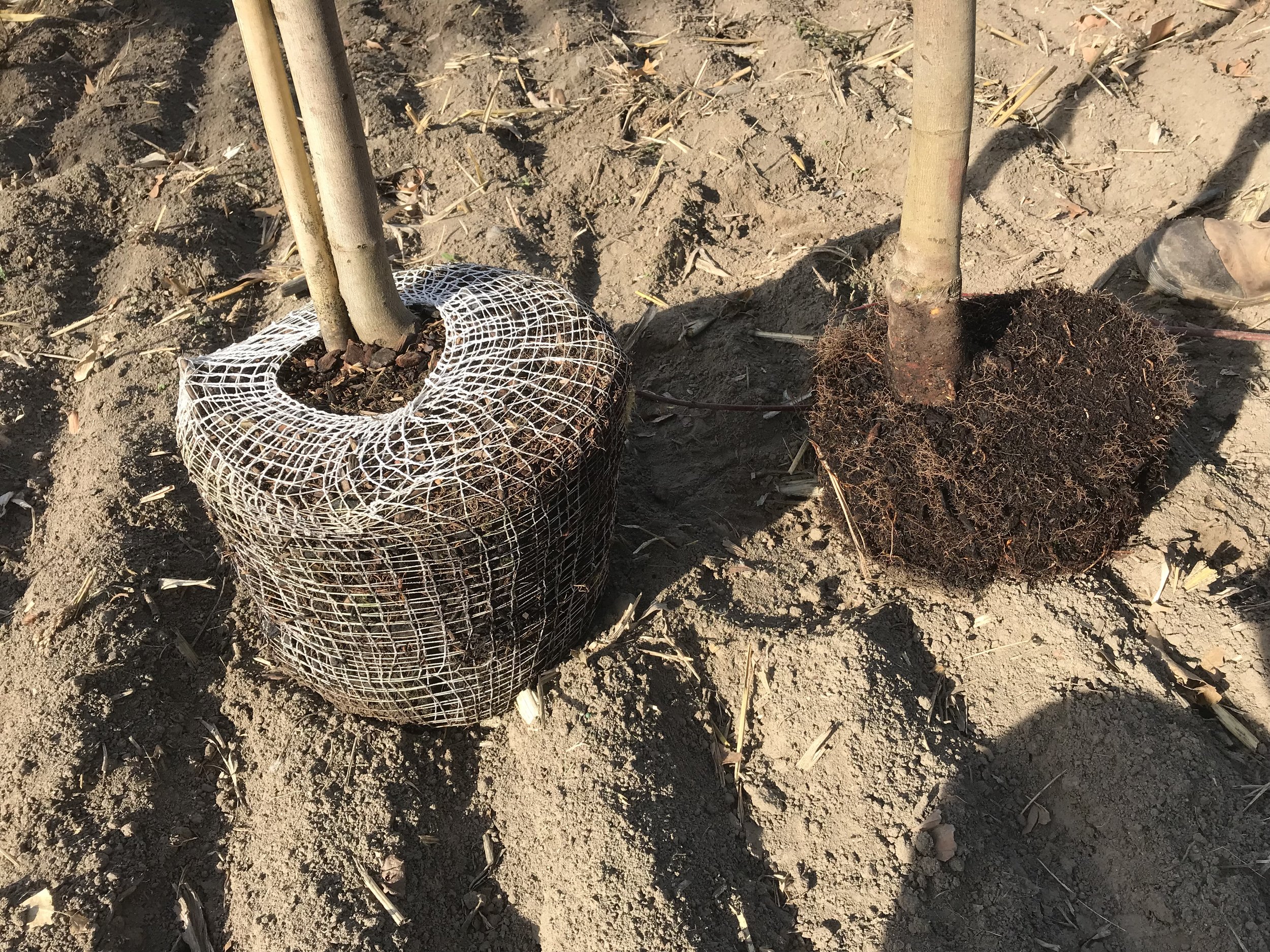
Before and after photos of root corrections
The next step is to fix any root problems. We verify that the root flare is an inch away from grade. If it is not, we remove the surface dirt until it is so. For potted liners as seen in these photos we also cut or score the roots to ensure the roots continue to go outward into their new soil. It's the same as when you plant trees. Sometimes it's amazing how deep a tree has been potted. The photo below shows some of the more drastic corrections we do.

Arthur hold a tree before he has gone through it and a tree that he has finished.
Once the tree has had both its roots and top gone over, we pot them and allow them to finish out. This generally will take a couple of growing seasons before we allow the tree to join the inventory at the store. It must be solid in it's pot and root just reaching the edge of the pot. This helps minimize transplant shock when planted in your yard.

Hoki and High Noon are both Tree Peonies. These are shrub type peonies that do not need staking or caging. You also don't cut them to the ground at the end of the growing season either. Tree Peonies are a woody shrubs that reaches about 6 ft tall. Slow growing and does well in full sun to part sun conditions. Tree peonies bloom before garden peonies, in mid to late April.
Headliner Blueberry Swirl Petunia is a mounding type petunia with a great bicolor bloom of purple and white. Heat loving and flowers from spring into fall. Reaches 10" tall and spreads to 24 to 30 inches wide. Easily filling a bed or pot with a great color show. Does not need deadheading to keep flowering. Feed and water regularly to keep happy.
Alex and Arthur's adventures of tree planting at CBC's Arbor Day event!
Read More
Champagne Bubbles Poppy is a mixture of colors for a plant that likes well drained soil. They love full to partial sun. To encourage more flowers remove spent flowers as they fade. Also allow the poppies to reseed themselves to extend their life.
Black Mamba Petunia is a spreading petunia that doens't need deadheading and offers a rich purple black color. Reminds me of black felt. Great to contrast white flowers or sweet potato vines. Like other petunias they prefer full to partial sun. Routine fertilizing is best for petunias.
Orange Storm Quince is a thorn less, fruitless Quince that offers coral orange flowers to welcome spring! The color is striking that runs along the branches. They reach 5 to 6 feet tall and wide. They prefer full to partial sun. Let Orange Storm be a backdrop to perennials or smaller shrubs.

Early April is when the irrigation water come back online is a great time to feed you trees, shrubs, and perennials.
For your plants you can use granulated fertilizers or fertilizer spikes. Which ever is easiest for you to apply. I find it faster and easier to use granulated; this is mainly because I have a lot of shrubs and my soil is very rocky. I just measure the size of plant and give it the appropriate amount listed on the label and then onto the next plant. Once I am done fertilizing I run my irrigation system to activate the fertilizer.
Three of my favorite plant foods for trees, shrubs and perennials are the Fertilome Azalea, Camelia and Rhododendron Food, the Fertilome Start n Grow and the G&B Paradise (organic). The Fertilome Azalea, Camelia and Rhododendron Food is great for plants that like acidic conditions like Rhodies, Dogwoods and Maples; you apply this one three times a year April, Memorial Day and Mid August. The Start-N-Grow is a good universal plant food full of trace elements that you only have to apply twice a year April and July. Paradise is a granulated organic fertilizer that is full of enzymes and trace elements to feed plants, apply in April, June and August. Any of them will yeild happy well fed plants!

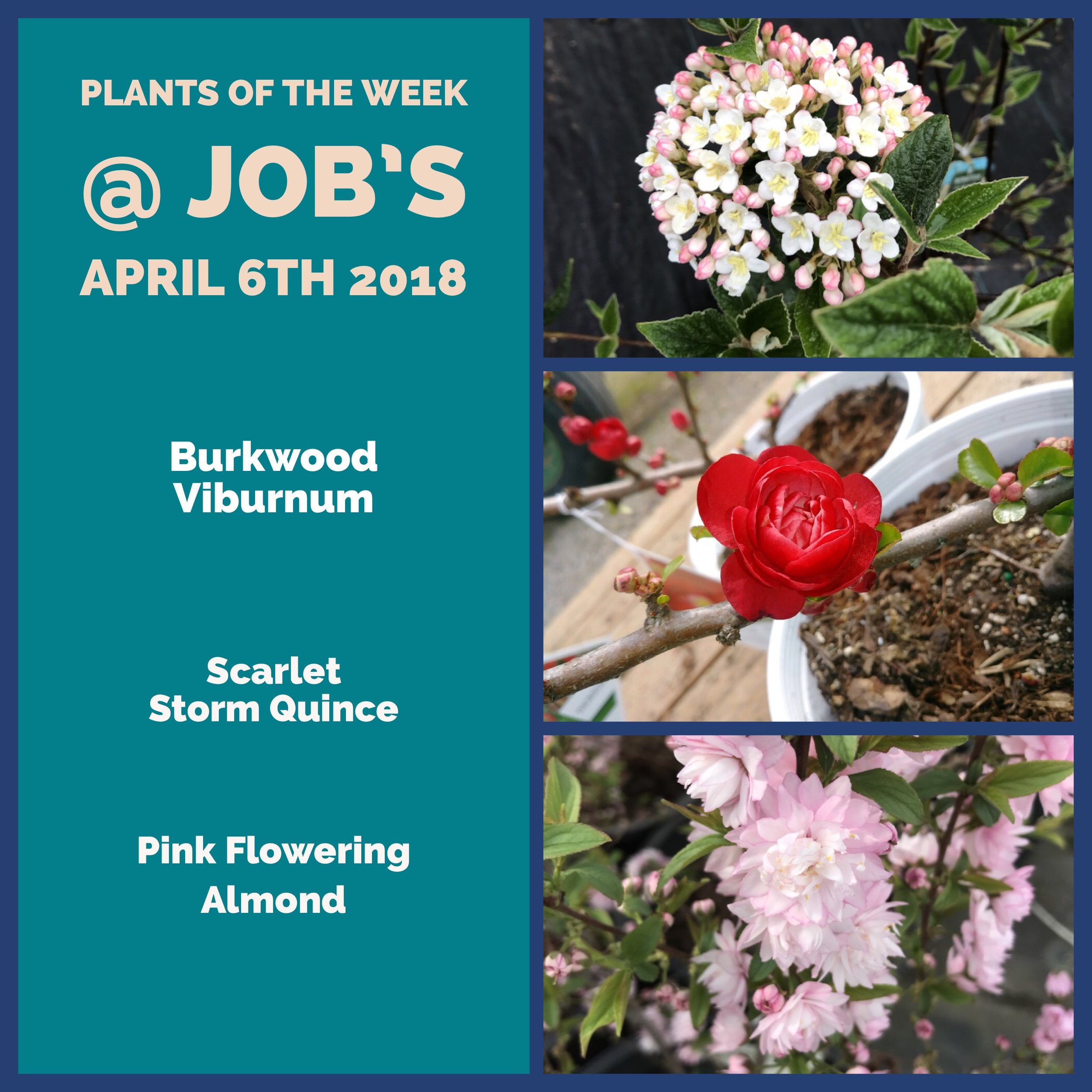
This weeks plants are very durable plants.
Burkwood Viburnum is a fragrant bloomer that reaches 10 feet tall and 6 to 8 feet wide. It's a cousin of the Snowball Bush but blooms earlier and very fragrant, some liken it to jasmine. To contrast the blooms it has glossy green leaves that in fall turn yellow and orange. Prefers full to partial sun.
Scarlet Storm or Double Take Scarlet Quince is a thorn less and fruitless Quince that is more garden friendly. Older Quince varieties could be nasty with the thorns but not any one of the Double Take series of Quince. The dark red blooms emerge before the leaves. Great for a backdrop with perennials in front. Reaches 6 feet tall and wide. Prefers full to partial sun.
Pink Flowering Almond, is actually more related to a cherry than an almond. The double pink blooms cover the branches in early April. Tends to be a little shrubby but can be pruned to be tamed after it has finished blooming. Reaches 5 to 6 feet tall and wide. Prefers full to partial sun.

Baby Tears Sedum is a succulent ground cover that loves full to partial sun and dry spots. The small foliage is where it gets it's name for the leaves are the size of baby tears. In summer it's green and as the temps cool down they turn bronze. In late spring into summer they flower small white flowers. At most only a few inches tall.
Tasso Red Bellis (English Daisy) is a biennial that flowers red blooms through spring and into summer, if you cut the spent ones off. It works great with tulips and other perennials. Can be used in borders or containers. Prefers full to partial sun.
Evergreen Shooters are an assortment of little evergreens that will work well for container gardens, miniature gardens, bonsai or fairy gardens. There are many different species but they are so fun to work with. I can't get over how the pot reminds me of those little desserts in shot glasses. Exposure varies with species of the Evergreen Shooter.

Bermudagrass is problem for a lot of Tri-City lawns. It is the grass with deep roots and runs it's tendrils throughout the yard spreading where ever it feels like it. Bayer has come out with Bermudagrass Control for lawns, it is a growth regulator that supresses the growth of the Bermudagrass and lets your preferred lawn to choke it out. Timing is critical on applying it, you want to hit the Bermudagrass when it begins to emerge in early April, then repeat applications on a monthly basis until it is no longer trying to grow. Easy to apply with the Read to Spray Bottle (RTS), just hook to a hose and begin spraying only the affected areas of the lawn. Be sure to let the product dry completely after application, before letting kids or pets back on the lawn. We stock it regularly here at Job's.
This weeks featured plants!
Read More
The dayliies are up, the black eyed Susans are waking up, even the salvias are peeking out of the ground, however the Hibiscus are still the cut back stalks that you left them back in February. Did they survive the winter?
The answer is yes, they most likely did survive the winter. They just are waiting for the ground to warm up a little more before they show sings of life. Wait until Mid May to see what peeks up.

Magical Gold Forsythia is a large flowering Forsythia that is compact at 5 to 6 feet tall and wide. It's also tends not to get lanky like the larger varieties. It likes full sun to part sun conditions. When it flowers in early March it is covered with large golden yellow blooms, a great way to start spring!
Kramer's Rote Heather is an evergreen that starts blooming in February and goes into April with dark pink flowers. It stays low at a foot high and spreads to about three feet. It prefers afternoon shade in our area.
Marianne Red Anemone is a perennial with gorgeous red blooms. It flowers in March. They reach about 1 ft tall and about 2 to 3 feet wide. In our area they do well in afternoon shade and morning sun. Don't freak out that they go dormant when it gets hot out.